



Tyler Sellars' founder story: from borrowing $9,000 for a first rooming-house down payment to building a real estate and self-storage portfolio, then starting Cactus.
I'm Tyler Sellars, a Canadian living in Spain and CEO of www.trycactus.com, built with the most incredible team of business partners.
I've been investing in self-storage for five years and real estate for seven. Here's my story.
Story of my first acquisition
It's 2018. I'm fresh out of college and working as a marketing manager for a tech startup in the beautiful city of Halifax, Canada.
At the time I was making $60k per year, roughly $45,000 USD, really enjoying my line of work and who I was working with. But because it was a startup, every couple of weeks our CEO would remind us of our runway, a playful word for how many months left we would have jobs. Reminders of limited job security became a constant alarm to get my sh*t together. They tortured me into getting something started while anticipating the inevitable.
Though my salary was modest for a recent grad, I found myself living paycheck to paycheck among the charming streets of Halifax. Determined to secure a brighter financial future, I began researching side hustles, as one does. Through YouTube and podcasts, I gravitated toward residential real estate investment. Having experienced life as a renter throughout university, I felt armed with an understanding of the industry.
Yet a fairly serious obstacle loomed: my lack of savings. I had none.

I took to social media, posting a heartfelt plea on my Instagram story, seeking a $9,000 down payment for a promising seven-bedroom rooming house in my hometown. By an extraordinary twist of fate, two followers emerged as my help: Patrick Scanlan and Kyle McConnell. Their unwavering support and financial contribution marked the start of my journey, for which I am forever grateful and will forever name them in my story.
With newfound resources in hand, I set off on a journey, pouring blood and sweat into converting that humble rooming house into a prosperous investment.

I was hooked. Within no time, the investment was generating monthly cash flow of roughly $1,200.
Fueled by this early success, I started acquiring as many properties as possible. I reinvested everything and convinced a few friends to partner with me once in a while. Within the following two years, I owned 12 properties.
Then a global pandemic took control of the globe.
Price surge. Time to sell
As the pandemic's ripples reverberated across nations, it brought an onslaught of challenges for real estate investors like me. Government restrictions prevented adjustments to rental rates to keep pace with inflation while barring the eviction of tenants facing financial difficulties. Struggling to meet my financial obligations, I found myself standing at the precipice of uncertainty. Every penny within my grasp was reinvested in growth, with little regard for my personal income. Out-of-town money had driven purchase pricing to unprecedented heights.
My realtor had never seen anything like it. The 28-unit property I had just bought six months earlier for $2.7M was now worth $3.8M.

I decided to sell everything at 27 years old.
Cue the internal dialogue: But now what, Tyler? How do you go up from here? Everything is getting more expensive, you just sold everything you built, and now you are essentially unemployable.
It's funny how just years earlier I would have wished to be in that position, but all I could think about at the time was: you are going to waste it and go broke again.
So I had to create a new focus that was longer term.
Self-storage introduction
Self-storage, an industry known for its profitability and stability, presented itself as a potential avenue for redemption. Reports indicated a steady increase in self-storage construction, even amid the turmoil of the pandemic. Intrigued, I delved into the intricacies of the industry, searching for a fresh start.
I began to look into investing in the self-storage industry.
SimpleStorage.ca was born
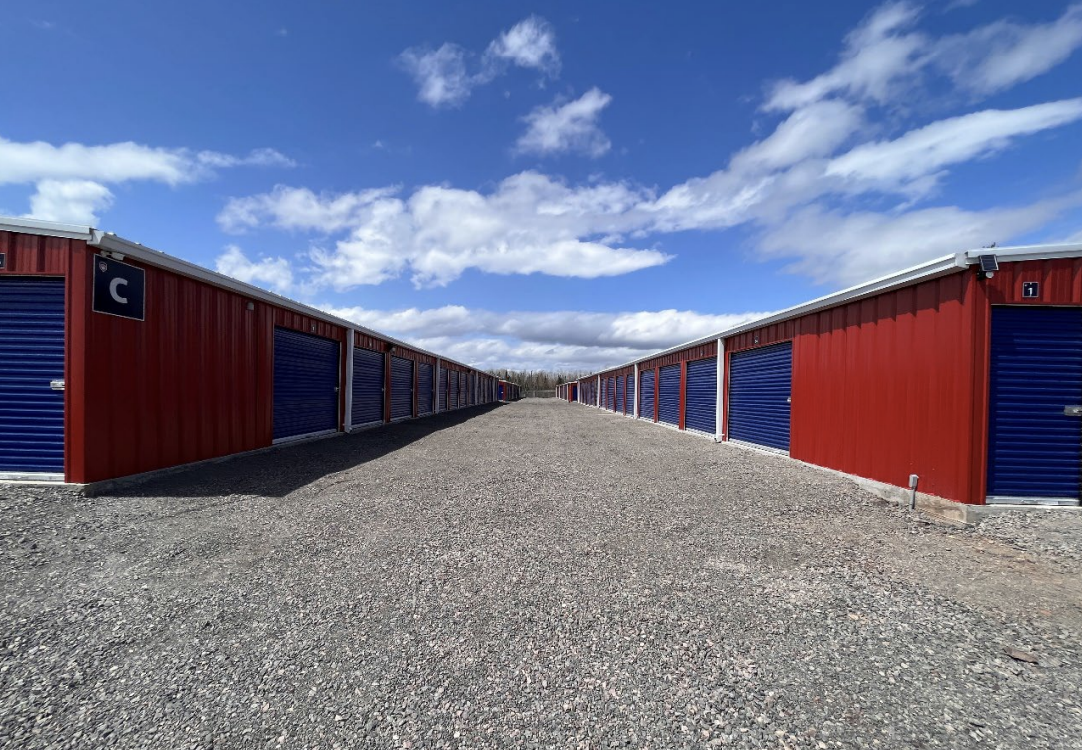
I started SimpleStorage.ca with the purchase of a 20-unit storage building with a fully functioning mechanic shop on a 10-acre plot of mainly undeveloped land. My trusted realtor found me the deal, and I bought it for around $350,000.
We cleared the land, cleared the mechanic shop, and started work on the expansion plan.
Finding suitable storage facilities or plots of land proved to be a hurdle, but it paled in comparison to the trials of establishing a reputable company. Determined to succeed, I devised effective marketing strategies, drawing increased traffic to the SimpleStorage.ca website.
Within two years, SimpleStorage.ca had emerged as a frontrunner in the storage industry, with three prominent locations catering to diverse markets. In addition to storage, we diversified our services by providing third-party management and franchising options. Our commitment to security led us to offer security camera setups for businesses, as well as support and installation for modern smart locks.
As I reflect on this journey, I am humbled. It started with seeking a down payment and grew into plans to expand our brand across Europe.
My next steps: Cactus
I plan to expand my real estate assets across Europe, but it is a new market and I will be syndicating, so I needed a new tool.
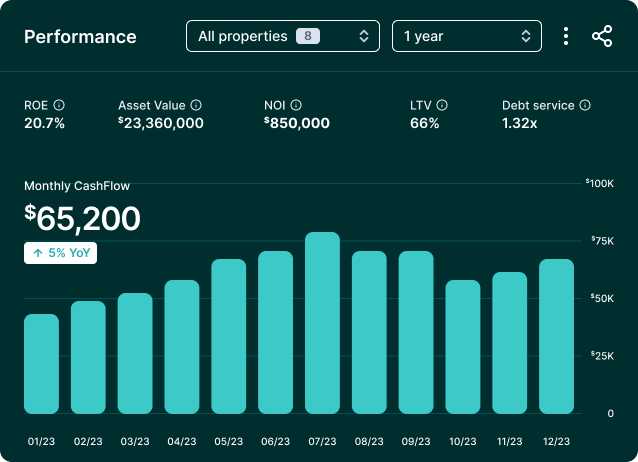
I created www.trycactus.com because I believe better real estate software should be available to more investors and operators. Cactus has evolved into a CRE deal workspace for source-backed underwriting, market context, model outputs, investor transparency, and repeatable decisions.
I truly believe investors should have access to a full view of their financial picture. Today, Cactus is built around that belief: deal documents, assumptions, market evidence, model logic, reporting, and team decisions should live in one place with source trails and review controls.
How Cactus turns this into defensible underwriting
Trust comes from the audit trail. Cactus keeps facts tied to documents, assumptions open to review, market evidence visible, and approved logic reusable through Proprietary Memory. That is the difference between a clean answer and an answer the team can defend.
- Extract relevant facts from OMs, rent rolls, T-12s, leases, PDFs, spreadsheets, and customer templates.
- Check rents, expenses, growth targets, cap rates, sales comps, and site context against market intelligence from premium data providers, public records, and firm history.
- Surface conflicts, confidence states, reviewer comments, and assumption overrides before the model becomes the memo.
- Populate Excel or Cactus models, then store approved facts, templates, comps, and decisions in Proprietary Memory for the next deal.
The point is not to make the model less sophisticated. The point is to make the source, market check, assumption owner, review state, and output path visible before the number reaches a partner, lender, client, or investment committee.
Defensible underwriting
Defend every number before it reaches IC.
Cactus gives CRE teams ARGUS-grade underwriting intelligence with document extraction, market checks, source trails, reviewable assumptions, Excel-ready outputs, and Proprietary Memory around the workflow.
- Rent rolls, T-12s, OMs, comps, and assumptions live in separate files.
- Market evidence gets copied into the model without a durable source trail.
- Reviewer decisions disappear after the memo, email thread, or spreadsheet version changes.
- Extract deal facts from OMs, rent rolls, T-12s, leases, PDFs, spreadsheets, and customer templates.
- Check rents, expenses, growth targets, sales comps, and other assumptions against market intelligence.
- Populate Excel or Cactus models and preserve approved logic as Proprietary Memory.
Read next